Should You Sell Your DC Home As-Is or Renovate First?
Should you renovate before selling your DC home? Usually not fully. In Upper Northwest DC, targeted cosmetic work and thorough preparation tend to return more than a major renovation, because buyers in this market generally want to make their own choices about kitchens and baths.
This is the question I get asked most often, and it is almost always framed as a binary: gut the kitchen, or list it the way it is.
The honest answer is that the winning move is usually neither one. Sellers who renovate heavily often spend $80,000 to recover something close to $80,000 — a lot of disruption for a wash. Sellers who list completely untouched leave real money behind, because buyers deduct for condition far more aggressively than the actual cost of fixing it.
The space between those two is where almost every good outcome lives. Figuring out where your house sits in that space is the entire exercise.
Why Full Renovation Rarely Pays in This Market
There is a specific reason major renovation underperforms in Spring Valley, Wesley Heights, AU Park, and Forest Hills, and it has to do with who is buying.
At this price point, buyers arrive with opinions. They have been looking at kitchens for a year. They have a designer, or they intend to hire one. When they walk into a house where someone else just spent six figures on finishes, one of two things happens: they like it, or they mentally add the cost of undoing it.
The second outcome is more common than sellers expect. Your quartz was someone else's compromise.
This is also where the industry's remodeling return studies get misread. Reports like the annual Cost vs. Value Report and NAR's Remodeling Impact Report consistently show that the projects returning the most are the smallest and least personal — exterior work, doors, garage doors, basic curb appeal. The expensive interior projects, the ones sellers imagine will transform their sale, are usually near the bottom.
What Buyers Actually Pay For
Here is where my design background is genuinely useful, because after enough listing appointments a pattern becomes obvious: buyers pay for legibility, not luxury.
A buyer walking through your house is doing rapid math. Not "do I like this kitchen," but "how much work is this house going to be?" Almost everything that moves their number is cheap.
What changes the offer
- Light. Dated fixtures and heavy window treatments make rooms read smaller and older than they are. Replacing both is inexpensive and changes the first impression of every room.
- Paint, in the right colors. Not just fresh — correct. Color that fights the natural light in a north-facing Wesley Heights living room will make a beautifully maintained house feel tired.
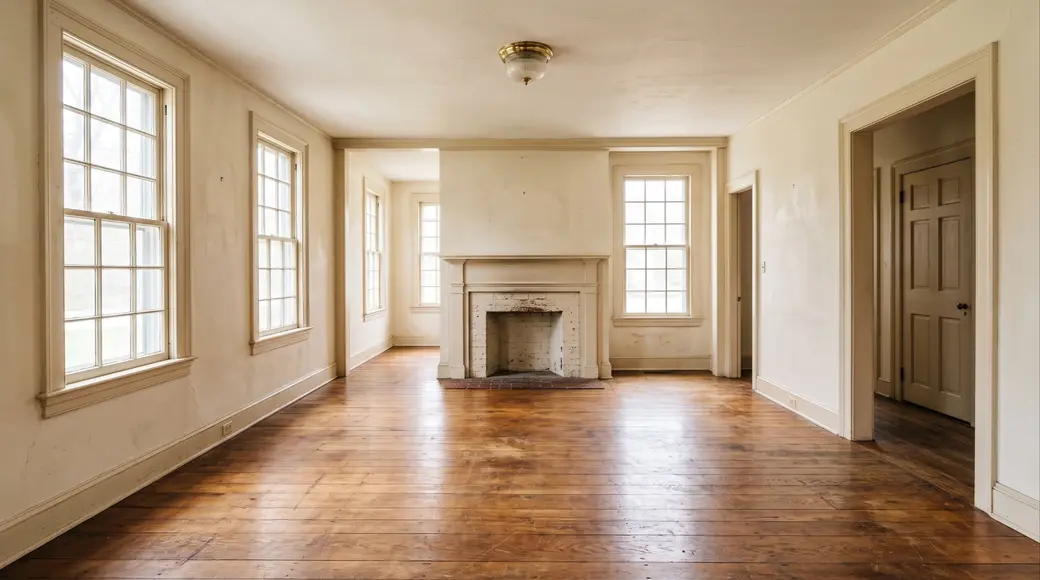
- Floors. Refinishing existing hardwood is one of the highest-return things a DC seller can do. Worn floors read as neglect even when nothing else is wrong.
- Hardware and fittings. Cabinet pulls, faucets, switch plates. Small, cheap, and they carry a surprising amount of the "updated" signal.
- Editing. Removing a third of the furniture makes rooms photograph and walk better than any renovation.
What rarely returns what it costs
- Full kitchen replacement immediately before listing
- Primary bath gut renovations
- Built-ins and custom millwork tuned to your specific taste
- High-end appliance packages the next owner may not value
- Anything requiring permits and a timeline you cannot control
The distinction is not price. It is whether the work removes an objection or expresses a preference. Objection-removal pays. Preference-expression does not.
When Selling As-Is Is the Right Call
As-is gets treated as a defeat. It is not — for some sellers it is clearly the better decision.
It usually wins when the property needs work at a scale that changes its category. If a house requires a new roof, systems replacement, and a kitchen, you are not preparing a home for market anymore, you are becoming a developer with one project and no margin. Renovation buyers will pay for that opportunity, and they will move quickly.
It also wins when the timeline is not yours to control — an estate sale, a relocation with a start date, a property being sold as part of a settlement. Certainty has real value, and construction is the enemy of certainty.
And it wins when you simply do not want to fund and manage a renovation on a house you are leaving. That is a legitimate answer. I would rather help a seller price and market an as-is property well than watch them spend eight stressful months on work they never wanted to do.
Selling as-is well is its own strategy: full disclosure, clear pricing, and marketing aimed specifically at buyers who are equipped to take on the project.
When Preparation Is Worth It
Prep work is worth doing when the house is fundamentally sound and its problems are cosmetic. That describes most homes in this market.
The test I use: can the objection be removed for less than the discount it will cause? Worn floors might cost a few thousand to refinish and cost fifteen thousand in buyer perception. That is an easy call. A dated but functional kitchen might cost sixty thousand to replace and only move the price thirty. That is an easy call in the other direction.
| As-is | Targeted preparation | Full renovation | |
|---|---|---|---|
| Best when | Major systems work needed, or timeline is fixed | House is sound, issues are cosmetic | Rarely — mainly when a property is unsellable in current condition |
| Cash required | None | Modest | Substantial and upfront |
| Timeline | Immediate | Two to six weeks | Months, with overruns |
| Buyer pool | Renovation buyers and investors | Broadest | Narrower than expected |
| Main risk | Leaving money on the table | Very little | Spending more than you recover |
Frequently Asked Questions
Will renovating my kitchen before selling increase my sale price?
Usually not by enough to justify the cost. Buyers in Upper Northwest DC often have strong preferences about kitchens and may plan changes regardless. Cosmetic updates — hardware, lighting, paint, refinished floors — typically return more per dollar than a full replacement.
What's the highest-return thing I can do before listing a DC home?
Refinishing hardwood floors, updating lighting, and painting in colors suited to each room's natural light. All three are inexpensive relative to their effect, and all three change how the house photographs, which determines how many buyers walk through the door.
Does selling as-is mean I'll get a low offer?
Not automatically. As-is means you are not making repairs — it does not require underpricing. Well-marketed as-is properties sell at fair value to buyers who want a project. What produces low offers is an undisclosed or unexplained condition, not the as-is designation itself.
How long does pre-listing preparation usually take?
Targeted cosmetic work generally runs two to six weeks depending on scope and contractor availability. Anything requiring permits should be assumed to take considerably longer, which is often reason enough to skip it.
Related Reading
- Can You Sell a House With Foundation Issues in Washington, DC?
- Should You Price Your DC-Area Home Below Market Value to Get More Offers?
Let's Figure Out What Your House Actually Needs
If you are trying to decide what to do with your house before you list it, I would rather walk through it with you than have you guess. I will tell you plainly what is worth doing, what is not, and what each version likely nets you.
Call or text me directly at 202.536.4043, or visit sherinemonir.com to get started.
Sherine is here whenever you're ready.
About Sherine Monir
Sherine Monir is a Realtor with Compass and also a licensed Interior Designer in DC, leading the Sherine Monir Group. She serves Upper Northwest DC, Bethesda and Chevy Chase, and Arlington, Alexandria, and McLean, and has been licensed in DC, Maryland, and Virginia since 2013. Named to RealTrends America's Best in 2026, ranking in the top 1.5% of agents nationally, she brings interior design credentials including NCIDQ, CID, and ASID to buyers and sellers across the region.
Compass Real Estate · 1313 14th Street NW, Washington DC 20005 · 202.536.4043
Equal Housing Opportunity. Sherine Monir is a member of GCAAR. Sherine Monir Group of Compass is a real estate agent affiliated with Compass. Compass is a licensed real estate broker under the name 'Compass Real Estate' in the District of Columbia. This article is general information only and is not legal, tax, or financial advice.
Recent Posts