Can You Sell a House With Foundation Issues in Washington, DC?

Can you sell a house with foundation problems in Washington, DC? Yes. DC homes with foundation or structural issues sell regularly — the outcome depends on what you disclose, how the condition narrows your buyer pool, and whether repairing before you list actually pays for itself.
If you have a structural engineer's report sitting on your kitchen counter right now, you are probably somewhere between annoyed and alarmed. I want to take some of the heat out of that.
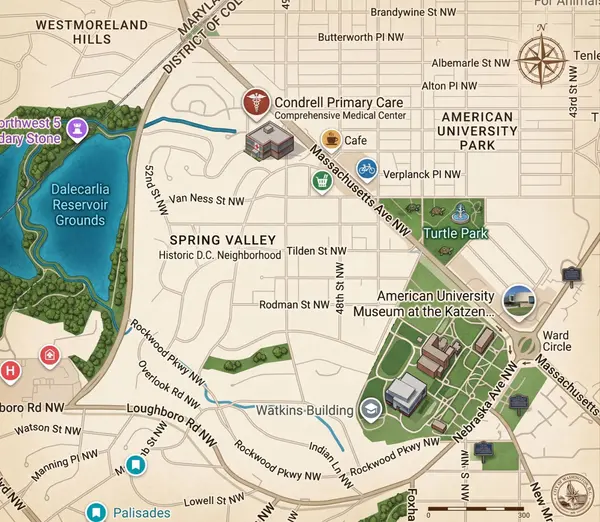
Foundation problems are common in this city, and they are common for reasons that have nothing to do with how well you have taken care of your home. A 1928 Tudor in Spring Valley, a Wesley Heights colonial on a sloped lot, a Tenleytown house with a basement someone dug out in 1994 to add ceiling height — these are homes built with materials and methods that behave differently after ninety years than they did in year one. Add DC's freeze-thaw cycles, old clay sewer pipes that crack underground and put water into the soil next to the foundation, and downspouts that have been quietly discharging against a foundation wall for decades, and you get movement.
One clarification, since these get confused: the sewer line carrying waste out is a different pipe from the water service line bringing water in. The lead pipe concern DC homeowners hear about applies to the water line. The sewer line is usually clay, and it's the one that affects your foundation.
What matters is not that the problem exists. It is what you do in the next four weeks.
Start With Disclosure
This is the part I will not soften.
DC sellers complete a Seller's Disclosure Statement covering known material defects in the property. Foundation movement, structural framing damage, and significant water intrusion are exactly the kind of thing that belongs on that form. If your home was built before 1978, there is a separate lead paint disclosure as well. In DC, the disclosure is signed ahead of time, before you go under contract — not after ratification.
Two points sellers get wrong constantly:
Selling "as is" does not remove the disclosure obligation. As-is describes what you are willing to repair. It says nothing about what you are required to tell people. You can sell as-is and still be fully on the hook for concealing a known problem.
A repair does not erase the history. If you fix a foundation issue before listing, that is a good outcome — but the condition existed and you knew about it. Disclose the issue and the repair together, with the invoices and any engineer's sign-off. Buyers respond well to a documented fix. They respond very badly to discovering an undocumented one during their own inspection.
Where a condition is genuinely unclear, your agent and a real estate attorney should help you decide how to describe it on the form. That is a conversation worth having before you sign anything. If you want to see how disclosure fits into the rest of the transaction, I walk through the full sequence in what happens after a seller accepts an offer.
Party Walls: The DC-Specific Complication
If you own a rowhouse, you have a structural situation most of the country does not.
Your party wall is shared. When settlement, cracking, or bowing shows up in a wall you hold in common with the house next door, the diagnosis and the repair both involve a neighbor who did not ask to be involved. Sometimes the underlying cause is on their side of the line — a failed downspout, an unpermitted excavation, a rear addition that changed how load travels.
This matters for your sale in three ways:
- Scope is harder to define. An engineer may not be able to fully specify the repair without access next door.
- Cost allocation is a negotiation, not a formula. How the expense is shared depends on the cause, the deed, and in some cases decades-old agreements nobody has looked at.
- Buyers get nervous about anything involving a neighbor. Unresolved shared-wall questions read as open-ended risk, and buyers price open-ended risk aggressively.
None of this makes the house unsellable. It does mean you want the conversation with the adjoining owner started early rather than triggered by a buyer's inspector.
How Foundation Issues Split Your Buyer Pool
Once disclosure is handled, the real strategy question is who is going to buy this house.
Financed buyers and the appraisal problem
Most buyers in Upper Northwest DC are financing. That is the constraint that drives everything else.
Appraisers are expected to flag conditions affecting structural soundness or safety. When that happens, a lender can condition the loan on repairs being completed before closing — which means the work has to happen on your dime, on your timeline, while the deal sits. Some buyers will do it. Many will walk, because they cannot carry the uncertainty.
This is the same mechanism I wrote about in selling a home with an old roof — a condition the appraiser flags becomes a financing problem, not just a repair problem.
The practical effect: active foundation movement, bowing walls, or significant water intrusion reduces the number of qualified buyers who can actually close on your house. Not to zero. But meaningfully.
Cash and renovation buyers
Cash buyers and renovation-focused investors are running a completely different calculation. No appraisal condition, no lender. They are pricing repair scope, permit timelines, holding costs, and unknowns.
They will ask for a bigger discount than a financed buyer would — the discount includes a risk premium for what the engineer could not see. In exchange, the transaction is usually cleaner: fewer contingencies, faster close, no financing fall-through.
The more uncertain your structural picture, the more your buyer pool shifts toward this group. A single hairline crack in a poured wall does not move it much. Active settlement does.
| Financed buyer | Cash / renovation buyer | |
|---|---|---|
| Main constraint | Appraisal and lender conditions | Repair cost and permit risk |
| Response to findings | Requests repairs or credits; may walk | Prices the condition into the offer |
| Typical pricing | Closer to market if the issue is resolved | Discount plus a risk premium |
| Certainty of close | Lower when structure is flagged | Higher |
Why the inspection period decides the price
In DC contracts, the inspection window is when buyers ask for credits, reductions, or repair escrows. Whoever defines the problem first tends to control that conversation.
If a buyer's inspector is the first person to describe your foundation, you are negotiating against a worst-case reading of a crack. If you commission your own structural engineer's report before listing, you have a specific diagnosis, a defined scope, and often a contractor estimate — and the conversation becomes about a number instead of a fear.
For most sellers with a known structural issue, that report is the highest-return few hundred dollars in the entire transaction.
Repair Before Listing, or Sell As-Is?
This is a pricing decision, not a construction decision. Here is how I actually work through it with sellers.
Repairing first tends to win when:
- The engineer can fully define the scope without exploratory demolition
- Permitting is straightforward
- The repair genuinely restores financing eligibility
- The repair cost is less than the discount a cash buyer would demand
- The timeline does not push you out of the season you need
That last one gets underweighted. A repair that takes eleven weeks and lands your listing in mid-December has cost you more than its invoice. If you are weighing repair work against timing more broadly, the concierge pre-listing model covers how I think about front-loaded improvements in Upper NW DC and Bethesda.
Selling as-is tends to win when:
- The scope cannot be pinned down without opening walls
- Permits are likely to be slow or complex, which is often the case for shared walls and underpinning
- Speed and certainty matter more to you than the last increment of price
- You do not want to fund construction on a house you are leaving
When as-is is the right call, the strategy is not to hide the condition — it is to price it honestly, disclose fully, and market deliberately to buyers who are capitalized to handle it. That is a different marketing plan, not a lesser one.
A note on presentation, because this is where my design background actually earns its keep: a house with a disclosed structural issue needs to look cared for everywhere else. When the rest of the home reads as maintained and considered, buyers interpret the foundation issue as one identified problem. When the house reads as neglected, they assume the foundation is the first of many. Same condition, very different offers.
What This Does to Your Net
Your proceeds are shaped by more than the sale price. In DC, the seller pays the transfer tax and the buyer pays the recordation tax — that is the standard here, not something you negotiate deal by deal. Your loan payoff, brokerage fees, and any negotiated closing help sit between the contract price and your bank account as well. I break the DC numbers down in the DC transfer tax guide for sellers, and the full three-jurisdiction picture in seller net proceeds in DC, Maryland, and Virginia.
The only number that matters is what you net under each scenario. That is a spreadsheet conversation, and it is worth having before you decide anything. You can start with a valuation on your home here.
Frequently Asked Questions
Do I have to disclose foundation problems if I'm selling my DC house as-is?
Yes. Selling as-is means you are not agreeing to make repairs — it does not reduce what you are required to tell buyers about known material defects. Foundation and structural issues belong on your disclosure form regardless of how the home is marketed.
Will a DC rowhouse party wall issue kill my sale?
Not usually, but it needs to be handled early. Shared-wall repairs involve your neighbor, which makes scope and cost harder to pin down, and buyers discount uncertainty heavily. Getting an engineer's assessment and opening the conversation with the adjoining owner before listing keeps it from surfacing as a surprise during inspection.
Can an FHA or conventional buyer get a loan on a house with foundation problems?
It depends on severity. Appraisers are expected to flag conditions affecting structural soundness, and when that happens the lender may require repairs before closing. Minor, stable, well-documented conditions often pass without issue. Active movement generally does not, which is what pushes those homes toward cash buyers.
Is it worth paying for a structural engineer's report before I list?
In most cases, yes. It converts an unknown into a defined scope with a number attached, and it means you — not a buyer's inspector — frame the problem. Sellers who skip this step usually end up negotiating against the worst-case interpretation of a crack.
Should I fix the foundation or drop the price?
Compare the repair cost against the discount a cash buyer would require, then factor in timeline. If the scope is clear and the repair restores financing eligibility, fixing it usually opens up enough additional buyers to more than cover the cost. If the scope is uncertain or permits will be slow, pricing the condition in is often the cleaner path.
Let's Look at Your Actual Numbers
If you are working through this on a specific house, I would rather look at your engineer's report and your actual numbers than have you guess from a blog post. I will walk you through both scenarios — repair and as-is — with what each one likely nets you.
Before you decide anything, it is also worth reading 10 questions to ask a listing agent before you sell in Washington, DC and my read on whether this is your year to sell.
Call or text me directly at 202.536.4043, or visit sherinemonir.com to get started.
Sherine is here whenever you're ready.
About Sherine Monir
Sherine Monir is a Realtor with Compass and also a licensed Interior Designer in DC, leading the Sherine Monir Group. She serves Upper Northwest DC, Bethesda and Chevy Chase, and Arlington, Alexandria, and McLean, and has been licensed in DC, Maryland, and Virginia since 2013. With interior design credentials including NCIDQ, CID, and ASID, she brings a designer's eye and market precision to buyers and sellers across the region.
Compass Real Estate · 1313 14th Street NW, Washington DC 20005 · 202.536.4043
Equal Housing Opportunity. Sherine Monir is a member of GCAAR. Sherine Monir Group of Compass is a real estate agent affiliated with Compass. Compass is a licensed real estate broker under the name 'Compass Real Estate' in the District of Columbia. This article is general information only and is not legal, tax, or financial advice — confirm your specific obligations and numbers with your attorney, tax advisor, lender, or closing officer.
Recent Posts