Georgetown, Washington DC Real Estate: The Town That Came Before the City
What does it cost to buy a house in Georgetown, and how quickly do they sell?
Over the two years ending October 2026, houses in Georgetown sold at a median of $2,025,000 after 13 days on the market, at a median 97.7% of their original asking price. Condominiums sold at a median of $795,000, but they took much longer, a median of 53 days. Buyers here are paying for some of the oldest houses in Washington, on very small lots, in a historic district where almost every change to the outside of a house is reviewed.
Georgetown is the oldest neighborhood in Upper Northwest DC and one of the most distinctive markets in the city. This guide covers where Georgetown begins and ends, how it was built, what the houses are, how historic review works, what the Bright MLS closed sales records show for houses and condominiums, and what that means if you are buying or selling.
Where Georgetown Sits
Georgetown runs from the Potomac River and the Georgetown Waterfront on the south to Rock Creek Parkway on the east. On the north, it follows Reservoir Road west of Wisconsin Avenue, then reaches up past Dumbarton Oaks Park toward Whitehaven Street. On the west, it takes in the Georgetown University campus to Archbold Parkway.
Across those lines are Burleith and Glover Park to the north, Foggy Bottom and the West End across Rock Creek, and Rosslyn across the Key Bridge in Virginia. The whole neighborhood is in ZIP code 20007, but that ZIP also includes Glover Park and Burleith, so the numbers in this guide come from the Georgetown subdivision alone.
A Port Town Older Than the City
Georgetown is older than Washington itself. The Maryland Assembly established it as a port town in 1751, four decades before the federal city was planned, and it grew rich shipping tobacco and flour down the Potomac. It became part of the new District of Columbia in 1791 but kept its own government for decades afterward. Congress revoked its separate charter in 1871 and ended Georgetown's existence as a separate legal entity in 1895, according to the DC Preservation League.
The oldest survivor is the Old Stone House on M Street, built in 1765. The National Park Service describes it as the oldest structure on its original foundation in the nation's capital. The C&O Canal begins in Georgetown and runs 184.5 miles to Cumberland, Maryland, and its towpath is one of the neighborhood's best-loved walks.
The neighborhood that buyers see today is the result of a 1950 federal law, the Old Georgetown Act, the first law to protect Georgetown's historic buildings and regulate what could be built there. It was named a National Historic Landmark in 1967. The district holds about 4,000 buildings dating from 1751 to 1950, from small frame houses to estates with landscaped grounds.
What the Houses Are
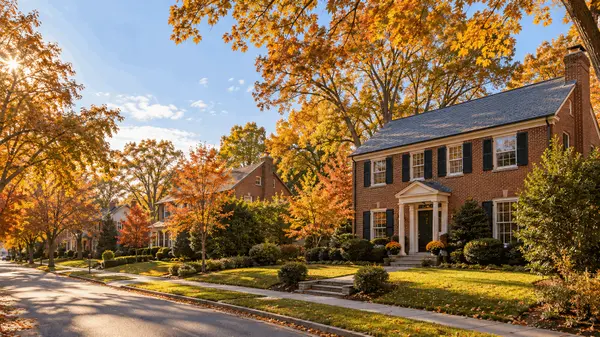
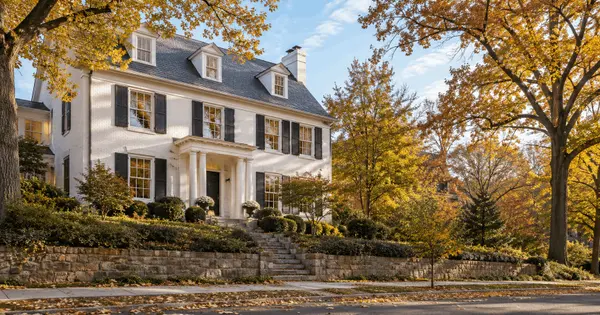
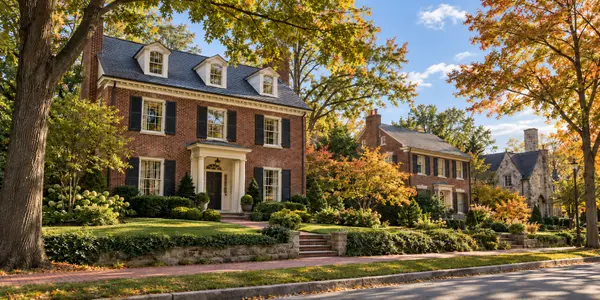
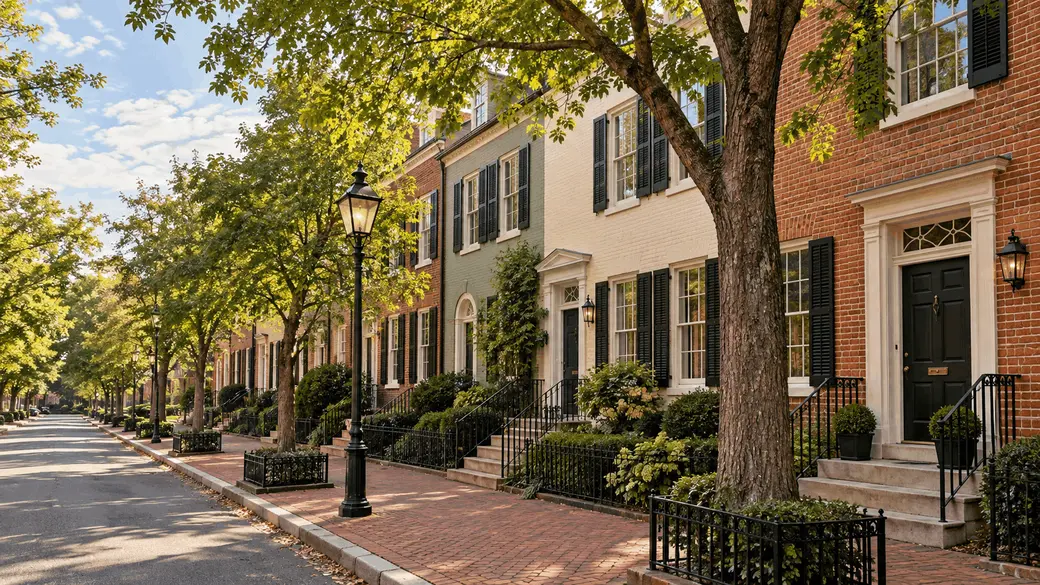
The signature Georgetown house is a brick Federal-style rowhouse built in the 1800s. Federal is the style listed for more than half of the 267 house sales in the Bright data, followed by traditional, Victorian and Colonial. Most houses have three or four levels, and about seven in ten have a basement.
Lots are tiny by any standard. The typical house sold in the past two years sat on about 0.04 acre, roughly 1700 square feet of land, and had three bedrooms and about 2030 square feet above grade. Fewer than one in three has a garage or parking space, which matters a great deal on Georgetown's narrow streets. A small number of large freestanding houses and estates, mostly in the upper part of the neighborhood near Dumbarton Oaks, account for the very top of the market.
As an interior designer, I see the same trade-offs again and again in these houses. They are narrow and deep, so light reaches the front and back rooms and not much in between. The kitchens were often added or moved long after the house was built, the stairs are steep, and the basements were rarely meant as living space. The renovations that add the most value open up the middle of the house, rework the kitchen and finish the lower level, but every one of them has to work within the historic review rules described below. I cover those decisions in when a kitchen renovation is worth it before selling and selling as-is or renovating first.
Renovating in a Historic District
Almost any change to the outside of a Georgetown house is reviewed before a permit is issued. Two public bodies share that work:
- The Old Georgetown Board, an advisory board of the U.S. Commission of Fine Arts, reviews exterior work that can be seen from a street or alley, including new windows, doors, additions, roofs and new construction.
- The DC Historic Preservation Office takes in the applications, reviews exterior work that cannot be seen from public space, such as many rear additions, and processes the permits once review is complete.
Interior work generally isn't reviewed, but anything that changes the outside, even at the back of the house, should be planned with the review process in mind. The DC Office of Planning explains how the process works. If you are buying with a renovation in mind, build review time into your plan before you make an offer. If you are selling, permits and approvals for past exterior work are worth gathering before you list, because buyers and their agents will ask.
The Numbers: Two Years Ending October 2026
These figures come from Bright MLS closed sales records for the Georgetown subdivision, covering settlements from October 29, 2024 through October 23, 2026. "Houses" means every home that is not a condominium or cooperative. Four sales of condominium parking spaces are left out. Retrieved October 28, 2026.
Houses
| Measure | Result |
|---|---|
| Houses sold | 267 |
| Total sales volume | $732.2 million |
| Median sale price | $2,025,000 |
| Price range | $457,500 to $28,000,000 |
| Median days on market | 13 |
| Median sale price as a share of original asking price | 97.7% |
| Sold at or above original asking price | 107 of 267 (40%) |
| Median price per above-grade square foot | $1,089 |
| Median above-grade size | 2032 sq ft |
| Median lot | 0.04 acre |
| Paid in cash | 53% |
Georgetown buyers pay for location and history more than for space: the typical house is modest in size but sold for about $1,089 per above-grade square foot. More than half of buyers paid cash.
Where the prices fall
| Sale price | Houses sold | Median days on market | Median share of original asking price |
|---|---|---|---|
| Under $1,500,000 | 69 | 12 | 98.3% |
| $1,500,000 to $2,000,000 | 61 | 8 | 98.6% |
| $2,000,000 to $3,000,000 | 62 | 13 | 98.0% |
| $3,000,000 to $5,000,000 | 48 | 17 | 96.8% |
| Over $5,000,000 | 27 | 59 | 94.9% |
Up to about $3 million, Georgetown houses behaved much the same: they sold in one to two weeks at close to full price. Above $5 million, the market changes. Those 27 sales took a median of nearly two months and closed about 5% below their first asking price.
The first week and a half decides the price
| Time to contract | Houses | Median share of original asking price |
|---|---|---|
| 10 days or fewer | 121 | 100.0% |
| 11 to 29 days | 50 | 98.0% |
| 30 days or more | 96 | 92.1% |
Nearly half of Georgetown houses went under contract within 10 days and sold at full asking price. Houses that took a month or more closed at a median 92.1%. On a $2 million house, that gap is about $158,000. It is the same pattern I see in American University Park, Spring Valley and Wesley Heights, and I explain how to use it in whether to price below market value.
Bigger houses, steady prices
| Measure | 12 months ending Oct 2025 | 12 months ending Oct 2026 |
|---|---|---|
| Houses sold | 135 | 132 |
| Median sale price | $2,005,000 | $2,062,500 |
| Median above-grade size | 1980 sq ft | 2210 sq ft |
| Median price per above-grade square foot | $1,138 | $1,039 |
| Median days on market | 12 | 13 |
| Median share of original asking price | 97.5% | 97.7% |
The median price rose slightly, but the houses that sold in the most recent year were larger, and the price per square foot came down. The better reading is a steady market with a different mix of houses, not a broad price change.
By era
| Year built (per county record) | Houses | Median price | Median $/sq ft | Median size |
|---|---|---|---|---|
| 1850 and earlier | 21 | $4,500,000 | $1,145 | 3638 sq ft |
| 1851 to 1900 | 169 | $1,895,000 | $1,097 | 1851 sq ft |
| 1901 to 1940 | 30 | $1,732,500 | $1,035 | 1696 sq ft |
| 1941 to 2000 | 45 | $2,439,500 | $1,051 | 2546 sq ft |
Two houses built after 2000 also sold. The oldest houses, built before 1850, are the largest and most expensive, because many of them are the freestanding Federal houses and estates that give Georgetown its character. The 1800s rowhouse is the core of the market, about six in ten sales. Keep in mind that the year built in MLS records often stays the same after a house is fully rebuilt behind its historic front, so it says more about the facade than about the condition of the house. My guide to buying new construction in DC covers what to check.
Condominiums and co-ops
| Measure | Result |
|---|---|
| Condominiums and co-ops sold | 129 |
| Median sale price | $795,000 |
| Median days on market | 53 |
| Median share of original asking price | 97.3% |
| Sold at or above original asking price | 39 of 129 (30%) |
| Median price per square foot | $795 |
| Median size | 1000 sq ft |
| Paid in cash | 57% |
Georgetown's condominium market moves at a very different pace from its houses. Most units are one or two bedrooms, and most sold between $500,000 and $1 million. Ten sold for more than $3 million, mostly in the luxury buildings near the waterfront. The same first-week rule applies: condos that went under contract within 10 days sold at full price, while the 72 that took a month or more closed at a median 93.7%. Condo buyers and sellers should also read my guide to the August 2026 condo lending changes, which affect which buildings buyers can finance.
What is on the market now
As of October 29, 2026, Bright shows 26 fee simple houses for sale or coming soon in Georgetown, not counting condominiums or co-ops. They have a median asking price of $2,775,000, ranging from $850,000 to about $14 million. Five more are under contract. At the recent pace of about 12 house sales a month, that is a little over two months of inventory.
Condominiums are a separate market. As of October 28, 2026, there were 32 on the market, at a median asking price of about $745,000, with nine more under contract or pending. At about six condo sales a month, that is more than five months of inventory, which gives condo buyers noticeably more room to negotiate than house buyers.
Daily Life
M Street and Wisconsin Avenue are Georgetown's main shopping streets, lined with stores, restaurants and cafes, and the quieter blocks of upper Wisconsin Avenue near Book Hill have galleries and smaller shops. Georgetown Waterfront Park runs along the Potomac below K Street. To the north, the gardens of Dumbarton Oaks and the trails of Dumbarton Oaks Park and Rock Creek Park are within walking distance.
Georgetown has no Metro station. The nearest is Foggy Bottom-GWU, across Rock Creek. Most residents walk, bike or drive, which is one reason a parking space adds real value to a Georgetown house.
Property taxes in Georgetown follow the same citywide rules as the rest of DC, and a buyer's bill is often higher than the long-time seller's. My guide to DC property taxes explains why.
Buying and Selling in Georgetown
If you are selling, plan for buyers to decide in the first week and a half, and price from the last three months of closed sales for houses of the same size and type. Gather permits and approvals for any past exterior work, because historic review history comes up in nearly every Georgetown sale. Presentation matters here more than most places: in a narrow rowhouse, light, flow and storage are what buyers notice first. My concierge pre-listing approach and selling guide walk through the steps. For your bottom line, read DC transfer tax for sellers and seller net proceeds in DC, Maryland and Virginia, and before hiring an agent, see the questions worth asking a listing agent.
If you are buying, have financing or proof of funds ready before you tour, since more than half of Georgetown buyers pay cash. Compare houses by price per square foot as well as total price, and check parking, basement height and the review history of any exterior work. Your best negotiating room is with condominiums, with houses above $5 million, and with any house that has been on the market for a month or more. My buying guide and what happens after an offer is accepted cover the rest. For the latest numbers across the area, see my September Upper Northwest DC market update.
You can browse current listings on my Georgetown neighborhood page. Sherine also works in Wesley Heights, Spring Valley, Chevy Chase, Bethesda, Chevy Chase MD, Arlington, Alexandria and McLean.
Frequently Asked Questions
What is the median home price in Georgetown, Washington DC?
Houses in Georgetown sold at a median of $2,025,000 over the two years ending October 2026, according to Bright MLS closed sales records. Condominiums and co-ops sold at a median of $795,000.
How fast do houses sell in Georgetown?
The median house went under contract in 13 days. Nearly half sold within 10 days at full asking price, while houses that took 30 days or more closed at a median 92.1% of their original asking price.
How much do Georgetown houses cost per square foot?
The median Georgetown house sold for about $1,089 per above-grade square foot over the past two years. Condominiums sold for a median of about $795 per square foot.
What kinds of houses are in Georgetown?
Mostly brick Federal-style rowhouses built in the 1800s, along with Victorian, Colonial and traditional houses and a small number of large freestanding estates. Lots are very small, typically about 0.04 acre, and fewer than one in three houses has a garage or parking space.
Do I need approval to renovate a house in Georgetown?
For most exterior work, yes. Changes that can be seen from a street or alley are reviewed by the Old Georgetown Board of the U.S. Commission of Fine Arts, and the DC Historic Preservation Office reviews other exterior work and processes the permits. Interior work generally isn't reviewed.
Where is Georgetown?
Georgetown is in Northwest Washington DC, between the Potomac River and Rock Creek, south of Burleith and Glover Park, and it takes in the Georgetown University campus. It is in ZIP code 20007.
Is there a Metro station in Georgetown?
No. The nearest Metro station is Foggy Bottom-GWU, across Rock Creek. Most Georgetown residents walk, bike or drive.
Thinking About a Move in Georgetown?
Whether you are preparing a house for its first week on the market or planning a renovation within the historic review rules, I'd be glad to walk through the numbers for your house. Call or text me at 202.536.4043, email sherine@smdg-llc.com, or request a home value review. Sherine is here whenever you're ready.
Sources: Bright MLS closed sales records, Georgetown subdivision, Washington DC 20007, settlements October 29, 2024 to October 23, 2026, and active listings as of October 28, 2026, retrieved October 28, 2026 (Bright MLS). History from the DC Preservation League and the National Park Service (Old Stone House, 250th anniversary and C&O Canal). Historic review from the DC Office of Planning and the U.S. Commission of Fine Arts. Market data is not guaranteed and does not reflect every transaction.
About Sherine Monir
Sherine Monir is a Realtor with Compass and also a licensed Interior Designer in DC (NCIDQ, CID, ASID), with a master's degree in interior design from Marymount University. Licensed in DC, Maryland and Virginia since 2013, she has sold over 200 homes totaling more than $115 million and is ranked in the top 5% of DC Metro agents. She was named to RealTrends America's Best 2026 (top 1.5% nationally), is a Washingtonian Elite Producer and Bethesda Magazine Top Producer, and is a DC Real Estate Awards honoree. She represents sellers and buyers across Upper Northwest DC, Bethesda, Chevy Chase, Arlington, Alexandria and McLean. Compass, 1313 14th Street NW, Washington DC 20005. Office 202.386.6330.
Recent Posts