Glen Echo Heights, Bethesda MD: A Buyer's and Seller's Guide to 20816
What should I know before buying or selling in Glen Echo Heights, Bethesda MD?
In Glen Echo Heights, how quickly a home sells and what it sells for are tightly linked. Over the twelve months ending July 2026, homes that went under contract within ten days closed at a median of 100.2% of their original asking price. Homes that took thirty days or more closed at 92.1%.
Two houses in the same price tier, on the same kind of street, can land in completely different situations — one drawing competing offers inside a week, another sitting past a month and closing well under asking. Telling those apart before you write an offer, or before you set a listing price, is most of what a good agent does here.
This is a guide to what actually distinguishes Glen Echo Heights: how it was built, why its housing data misleads people, and what matters most when you are preparing a home here.
Where Glen Echo Heights Sits
Glen Echo Heights occupies the western edge of Bethesda in ZIP code 20816, on the high ground between River Road and MacArthur Boulevard as the land falls toward the Potomac. The C&O Canal towpath and the Potomac Heritage Trail run below it. Glen Echo Park sits at its southern edge, and the Clara Barton National Historic Site is next door.
The neighborhood’s own boundaries are looser than most buyers expect. The Glen Echo Heights Citizens’ Association treats the original tract as including Mohican Hills, which many buyers and some listing agents describe as a separate neighborhood. In Bright MLS both areas commonly appear under the Glen Echo Heights subdivision name — which matters if you’re running your own comparables and wondering why the numbers look inconsistent.
Elevation is the underrated feature. The Baltzley brothers marketed exactly this in the 1880s: land high enough above the river that the summers were tolerable before air conditioning existed. The topography is still why so many houses here have walk-out lower levels and why lot grading varies so much from street to street.
The History Nobody Mentions in the Listing Remarks
In 1888, twin brothers Edwin and Edward Baltzley — who had made their money on an improved eggbeater — bought the land along the Potomac from Cabin John Creek out to Walhonding Road and named it Glen-Echo-on-the-Potomac. They opened five quarries, built stone houses that looked like small castles, and called the stretch of river the Washington Rhine. They financed a railroad to bring buyers out from the city.
In 1891 they incorporated the National Chautauqua of Glen Echo, a cultural assembly that opened that June and was in financial trouble within a year. The site was leased for amusements, and by 1911 the Washington Railway and Electric Company had turned it into the amusement park that ran until 1968. The National Park Service took it over in 1970. The 1921 Dentzel Carousel still runs, and the Spanish Ballroom came through a nineteen-million-dollar restoration between 2003 and 2010.
Clara Barton built her house and the American Red Cross headquarters there because the Baltzleys encouraged her to.
None of this changes what a house is worth. It does explain why the housing stock is so uneven — the neighborhood was assembled over more than a century, in waves, on hilly ground — and it is the kind of thing buyers moving into a neighborhood want to know about the place they’re going to live.
Why “Year Built” Misleads Buyers Here
This is the single most practical thing I can tell you about Glen Echo Heights.
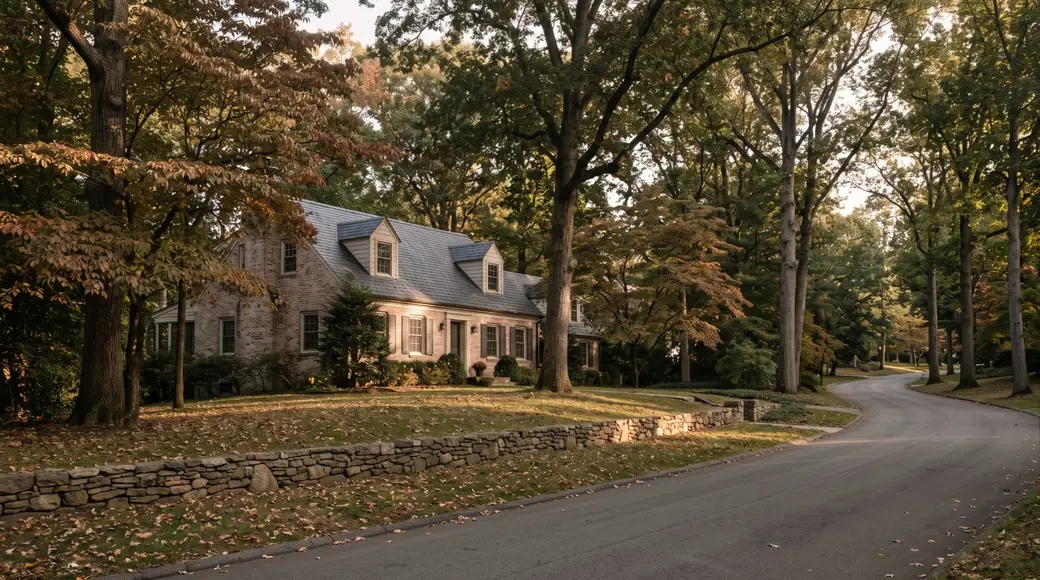
A large share of the houses here have been expanded rather than replaced. A builder takes a 1950s house, keeps the original front elevation, and adds substantially to the back and the side. The county record still shows the original year built. So you will see a listing that says 1954, walk in, and find a fully current house — or you will see the same 1954 and find genuinely original systems behind a new kitchen.
The last twelve months make the point. Two houses in the neighborhood sold twice inside that window. One closed in the low-$1M range in late 2025 and again in the low-$2M range nine months later. The other closed in the mid-$700,000s in late 2025 and again just under $1.2 million six months later. In both cases the county record still shows the same original year built — 1990 and 1961 — before and after. The date did not move. Everything else did.
The consequence is that filtering by year built will make you miss houses you should see and waste showings on houses you shouldn’t. The useful signals here are the roofline from the street, where an addition meets the original structure, and the mechanical systems. Not the date.
Ground-up new construction is genuinely scarce, and it prices accordingly: of the thirty-two sales in the past year, the eight built in 2000 or later closed at a median of $2,697,500, while the eighteen built before 1970 closed at a median of $1,225,000.
The Numbers: Twelve Months Ending July 2026
This is the one section of this guide tied to a specific window. Everything above it holds regardless of when you’re reading. I refresh the figures below each quarter.
Thirty-two homes closed in the Glen Echo Heights subdivision between late August 2025 and the end of July 2026, totaling $54,610,838.
| Closed sales | 32 |
| Median sale price | $1,450,000 |
| Price range | $750,000 – $3,350,000 |
| Median days on market | 13 |
| Median share of original list price | 97.7% |
| Sales at $2M or above | 9 |
| Sales between $1M and $2M | 20 |
| Sales below $1M | 3 |
The number that should change how you behave is this one. The fifteen homes that went under contract within ten days closed at a median of 100.2% of their original asking price. The ten that took thirty days or more closed at a median of 92.1%.
That is an eight-point spread, and while the exact figures move from quarter to quarter, the relationship behind them is persistent in this neighborhood — I have watched it hold for years. It is not really about the houses. It is about how they were priced and prepared at launch. A Glen Echo Heights home that comes out correctly tends to trade at or above asking inside two weeks. A home that comes out high spends a month or more finding its level and then sells at a discount to where it started — and the seller usually nets less than if it had been priced properly on day one.
Two properties in the past year show the long version of that. One closed after 8 days on its final listing but 184 cumulative days across relistings. Another closed after 54 days on its final listing and 232 cumulative. Cumulative days on market is the number to ask for; the headline figure can be reset.
Source: Bright MLS, closed sales in the Glen Echo Heights subdivision, Bethesda MD 20816, August 25, 2025 through July 30, 2026. Retrieved August 20, 2026.
Selling in Glen Echo Heights
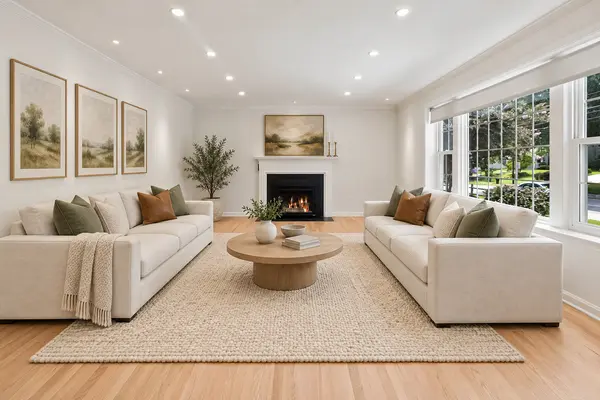
Whether to prepare or renovate before listing matters more here than in a neighborhood of consistent housing stock, because your house is being compared against a set of properties that vary wildly in how finished they are. A well-prepared 1950s expansion will outsell a larger house that shows its age, and the gap is not small.
How I approach that depends on whether you’re still living in the house. If it’s vacant, I bring in a staging company and direct the plan. If you’re in residence, I work with you using what you already own — editing, rearranging, adjusting lighting — which costs a fraction of rented furniture and, in a house with real character, usually looks better.
I have a master’s in interior design from Marymount and I’m NCIDQ certified, with CID and ASID membership. The practical value of that is that I’m as willing to tell you not to spend money as to spend it.
Frequently Asked Questions
Where is Glen Echo Heights, Bethesda MD?
Glen Echo Heights is in ZIP code 20816, on the high ground between River Road and MacArthur Boulevard in western Bethesda, above the C&O Canal and the Potomac. Glen Echo Park and the Clara Barton National Historic Site sit at its southern edge. The original tract also takes in Mohican Hills.
Is Mohican Hills part of Glen Echo Heights?
Historically yes — both sit on the land the Baltzley brothers assembled in 1888, and the citizens’ association treats them as one area. In practice you’ll see them described both ways, and Bright MLS often groups them under the Glen Echo Heights subdivision. It’s worth knowing when you’re comparing sale prices.
Why does the year built on Glen Echo Heights listings seem wrong?
Because many houses here were expanded rather than rebuilt. The original front elevation stays, the county record keeps the original date, and the house behind it may be almost entirely new. Filtering searches by year built will cause you to miss properties you should see.
What are homes selling for in Glen Echo Heights?
In the twelve months ending July 2026, thirty-two homes closed in the subdivision at a median of $1,450,000, ranging from $750,000 to $3,350,000, with a median of thirteen days on market. Nine sold at $2 million or above. Homes built in 2000 or later closed at a median of $2,697,500; homes built before 1970 closed at a median of $1,225,000.
How should I choose an agent for Glen Echo Heights?
Ask which parts of the neighborhood they’ve actually closed in — this area varies enough that Bethesda-wide experience isn’t the same thing. Ask how they’d read a property’s days on market before advising you what to offer, and ask for cumulative days rather than the headline number. The right agent is the one whose reasoning holds up when you question it.
What recognition has Sherine Monir received?
RealTrends America’s Best 2026, the top 1.5% of agents nationally. Bethesda Magazine Top Producer. Washingtonian recognition. DC Real Estate Awards honoree. Licensed since 2013, with more than 200 homes sold totaling over $115 million.
Thinking About Glen Echo Heights?
If you’re weighing a purchase here, or wondering what your house would bring, the useful conversation happens before there’s a deadline attached to it. Sherine also works in Chevy Chase MD, Upper Northwest DC, and Arlington, Alexandria and McLean.
Call or text Sherine directly at 202.536.4043 — or visit sherinemonir.com to get started.
Sherine is here whenever you’re ready.
Recent Posts